
Alstom: AI-Driven Train Maintenance
Alstom
9
Detection Models
Audio AI
Compressor Monitoring
75%
Time Reduction
100+
Checkpoints Per Consist
THE CHALLENGEWhat They Faced
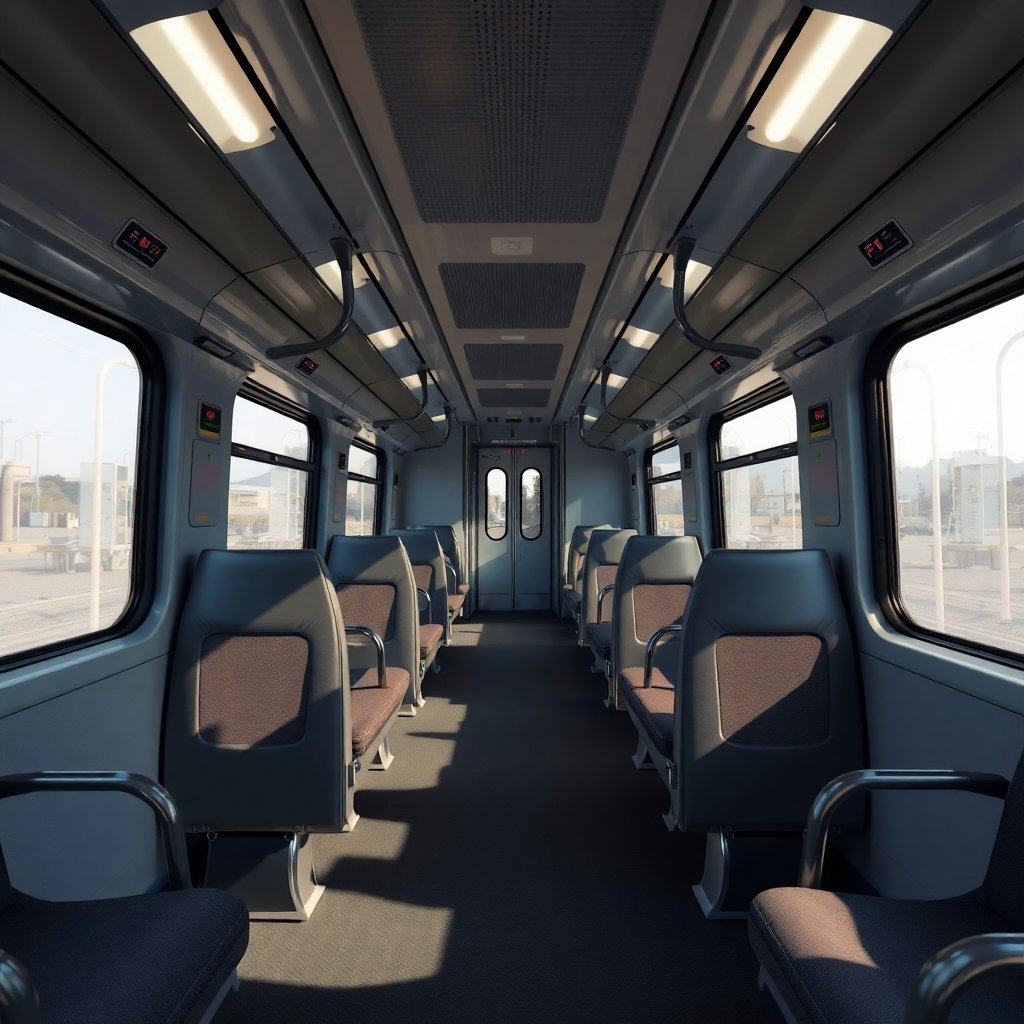
Manual visual inspections of train consists were inconsistent across maintenance teams, with subjective assessments leading to missed defects and costly in-service failures. Inspectors were responsible for 8 specific inspection tasks: label damage detection, seat wear assessment, fastener alignment verification, defective light identification, fire extinguisher OCR reading, window scratch detection, hand support inspection, and red tag flagging. The sheer volume and variety of checks meant human inspectors inevitably missed defects, especially under time pressure.
Brake pad measurement was a particularly critical pain point. Technicians had to physically measure brake pad thickness using handheld calipers at every axle — a slow, error-prone process that created bottlenecks during scheduled maintenance windows. Compressor health was only assessed during those same windows, with no continuous monitoring between service intervals, meaning early signs of degradation went undetected until failures occurred in service.
THE SOLUTIONHow Sensfix Helped
Sensfix developed 9 proprietary computer vision detection models, each trained for a specific defect type: label damage, seat wear, fastener misalignment, defective lights, fire extinguisher expiry (via OCR), window scratches, hand support defects, red tag presence, and general exterior damage. These models run on depot camera infrastructure, scanning every consist as it enters or exits the maintenance facility.
For brake pad measurement, Sensfix deployed a camera-based sub-millimeter thickness measurement system at the depot entry point. As trains pass through, high-resolution cameras capture brake pad profiles and the CV model calculates remaining pad thickness without any physical contact — eliminating the manual caliper bottleneck entirely.
Audio AI monitors compressor health via spectral analysis at 5KHz sampling rate, continuously listening for frequency shifts, harmonic anomalies, and vibration signatures that indicate bearing wear, valve degradation, or refrigerant issues — all detectable weeks before a compressor would fail in service.
Automated interior scanning covers 100+ checkpoint items per consist, running through the full interior inspection checklist in a fraction of the time required by human inspectors. TaskflowDigitizerAI provides step-by-step digital maintenance workflows with mandatory photo evidence at each stage, ensuring every repair action is documented and traceable.
9
Detection Models
Audio AI
Compressor Monitoring
75%
Time Reduction
100+
Checkpoints Per Consist
THE OUTCOMEMeasurable Results
The deployment delivered seven measurable outcomes: (1) Standardized inspection quality across all maintenance depots, eliminating subjective variation between inspectors. (2) 75% reduction in inspection time per consist, freeing maintenance crews for higher-value repair work. (3) Early compressor fault detection via continuous audio monitoring, catching degradation weeks before scheduled maintenance windows. (4) Complete digital audit trail for every inspection, with timestamped photo evidence and AI assessments linked to each consist. (5) Reduced unplanned downtime through predictive identification of components approaching failure thresholds. (6) Automated regulatory compliance documentation, with inspection records formatted for rail authority requirements. (7) Scalable architecture designed for rollout to additional depots across the Alstom network.
ADDITIONAL CAPABILITYFluid Level & Leak Monitoring
Challenge
Railway rolling stock relies on multiple fluid systems — hydraulic systems for braking and door operation, coolant circuits for engine and HVAC, lubricant reservoirs for gearboxes and bearings. During depot inspections, technicians manually checked fluid levels by visually inspecting reservoirs, dipsticks, and sight glasses across each train consist. Leaks were detected only when fluid visibly pooled on the depot floor or when a system lost enough pressure to trigger an onboard warning — by which point the damage was already progressing. Early-stage leaks — slow seeps from hose connections, hairline cracks in reservoir housings, degrading seals on hydraulic fittings — were nearly impossible to catch during time-constrained depot inspections. These small leaks compounded into expensive failures: contaminated braking systems, overheated compressors, and unplanned vehicle withdrawals from service.
Solution
Sensfix extended the existing depot inspection system with fluid monitoring capabilities. Visual leak detection via ServiceScanAI — cameras at the depot entry point (the same cameras already performing brake pad and interior inspection) were trained to detect fluid traces on undercarriage components. The AI identifies wet spots, drip patterns, and staining on surfaces that should be dry — distinguishing between fresh leaks, residual moisture, and normal condensation. Fluid level verification via ServiceOCRPro — during routine walkthrough inspections, technicians point smartphone cameras at reservoir sight glasses and level indicators. The OCR engine reads the current level, compares it against the expected range for that vehicle type, and flags any reading outside tolerance. Historical readings per vehicle build a trend line that catches slow-declining levels before they reach critical. The Multimodal Rule Engine combines visual leak evidence with fluid level trends — if a vehicle shows a below-threshold coolant level AND visual staining near a hose connection, the system automatically escalates to a priority maintenance ticket rather than a routine inspection flag.
Result
Fluid system issues that previously progressed to the point of system failure or emergency withdrawal are now caught at the early seep stage — when a simple seal replacement or hose tightening resolves the issue. The combination of visual detection (catching what the eye misses during rushed inspections) with OCR-based level tracking (catching the slow decline that single-point measurements miss) creates a two-layer safety net for fluid system health. This capability demonstrates the platform's expandability — the same cameras and mobile devices already deployed for brake pad measurement, compressor audio monitoring, and interior inspection extend to fluid monitoring without additional hardware.
“The combination of visual and audio AI gives us a level of predictive insight we never had with manual inspections. Defects are caught earlier, maintenance is faster, and our trains run more reliably.”
Maintenance Engineering Lead
Alstom
Explore this vertical
Vehicle Maintenance
MORE CASE STUDIES
Related Success Stories
Achieve Results Like Alstom
See how the SAAI Suite can transform your operations. Book a personalized demo with our team.